Our Groceries Shopping List
- 4.7
- Rating
- 1.00M
- Installs
- Free
- Price

 Analysis by App-foxy
I use grocery-list apps for one simple reason: the list has to be useful at the exact moment I am standing in a shop, not merely look tidy at home. Our Groceries Shopping List is built around that practical problem. It is a free shopping app from OurGroceries, Inc. that lets a household keep grocery planning in one shared place instead of passing around paper notes or sending a stream of messages.
That focus makes it easy to understand. This is not trying to be a full meal-planning service, a recipe library, or a supermarket marketplace. It is a shared list for everyday shopping. In my experience, that narrow purpose is also its biggest strength: when several people buy food for the same home, a current list is often more valuable than a long list of extra tools.
The app has a 4.7 average from roughly 55 thousand ratings, and it has passed the million-install mark. Those figures do not replace personal testing, but they do fit my impression that this is a familiar choice for people who want a straightforward household list rather than a complicated productivity system.
You May Also Like

 Pandora - Music & Podcasts
Pandora’s Music Is Easy to Start, but Harder to Recover
Pandora’s strength is its low-effort path from a seed to a station. Its weak spot is how much confidence it asks you to place in connection, setup, and quiet recovery.

 8 Ball Pool
 Is Built on Rivalries, Rematches, and Routine
A close look at the rivalries, rematches, shared routines, and unanswered safety questions that turn a quick pool match into a persistent mobile community.

 Samsung Music
’s Quiet Strength Is Playing What You Already Own
Its reach comes less from spectacle than from dependable access to a personal library. That simplicity is both the app’s strongest retention engine and its ceiling.

 AccuWeather: Weather Radar
AccuWeather Review: A Quick, Clear Forecast for Everyday Decisions
For everyday plans, the best forecast is the one you can understand quickly. AccuWeather makes rain timing, radar, and local conditions easy to act on, with a few trade-offs.

 Hill Climb Racing
Why Hill Climb Racing Still Turns Crashes Into One More Run
A tiny car, a bumpy hill and one more upgrade: Hill Climb Racing keeps resurfacing because its simple chaos makes every near-miss feel personal.

 AliExpress - Shopping App
AliExpress Makes Global Shopping Feel Personal, but Shoppers Bear the Risk
AliExpress turns a global marketplace into a pocket-sized discovery engine. Its reach is useful, its shopping loop compelling, and its trade-offs easy to miss.
More From Our News Desk
View All News


How the app fits into real grocery routines
I find a shared grocery list works best when it fits naturally into the small moments before a trip, not just the shopping itself. This section looks at how I’d build that habit around Our Groceries, including a simple way to keep entries useful when several people share the work.
A shared list that follows the household
The most useful way to think about Our Groceries is as a common workspace for shopping. One person can add an item before work, another can adjust the list during the day, and the shopper can use the current version in the store. That removes a surprisingly common problem: arriving with an old screenshot or discovering that two people bought the same thing because neither knew the other had already gone shopping.
A realistic example is a family preparing for a busy week. I might add milk, vegetables, and breakfast items in the morning. Someone else could add ingredients later, while another household member checks what is already covered during a shopping trip. The value is not just the list itself; it is the shared timing. Everyone is working from the same plan instead of maintaining separate notes.
This also suits couples with different schedules. If one person shops on the way home and the other remembers an item during the afternoon, the list can be updated without a phone call. For roommates, it can help separate the vague phrase “we need food” into a visible set of items that everyone can understand before heading out.
Why a focused shopping tool can beat a general notes app
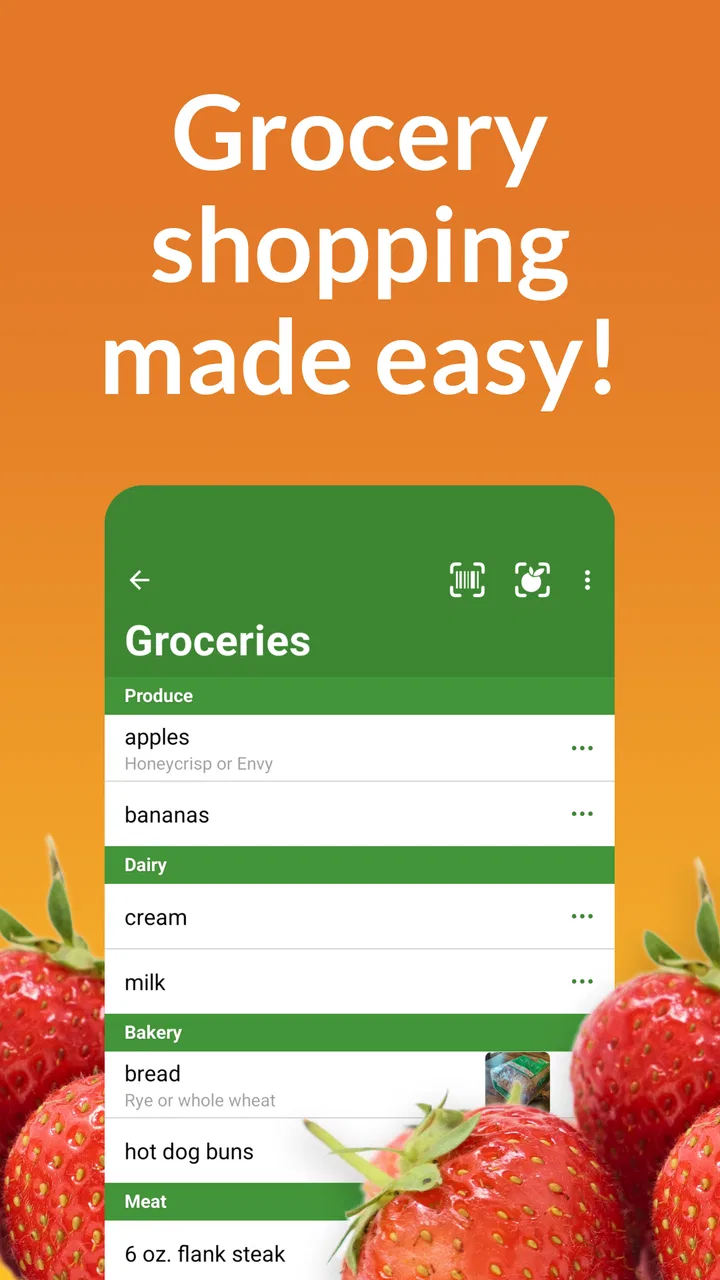
A notes app is flexible, but flexibility can become friction. A grocery list written as a paragraph is harder to scan, harder to update, and easier to misread when the store is busy. Our Groceries is designed around individual shopping items, so the act of checking something off feels more natural than editing a block of text.
Compared with a messaging thread, the advantage is even clearer. Messages are excellent for conversation but poor at preserving one clean current list. “I bought that already” may be buried several replies above the latest request. A dedicated list keeps the shopping task separate from unrelated family conversation, which is a small design decision with a real effect on reliability.
It can also be more approachable than a broad task-management app. General organizers often bring projects, reminders, labels, calendars, and other concepts that are useful elsewhere but unnecessary for a quick supermarket trip. If all I need is a shared grocery list, that extra structure can slow me down rather than help.
Small habits that make the list work better
The app becomes more dependable when I treat it as a living list instead of a place to dump last-minute thoughts. I prefer adding items as soon as I notice they are running low. That gives the household time to see the request and avoids the rushed message sent from a checkout line.
I also find it helpful to use consistent wording. “Tomato sauce” is easier for another shopper to understand than a personal abbreviation, and a specific item is less likely to create a follow-up question. This is not a glamorous feature, but shared lists succeed or fail on clarity. A household should agree on how detailed an entry needs to be, especially when several brands or sizes are possible.
Another practical habit is to check the list before leaving, not only after entering the store. That is when I can spot duplicate requests, remove something already purchased, and ask about an unclear item while the other person is still available. The app supports the workflow, but it cannot resolve ambiguous household decisions by itself.
What the free access means in practice
Our Groceries is free to download and use, which makes it easy to try without committing money first. That matters for a shared household because everyone can decide whether the routine fits before paying for anything. The free entry point is the clearest part of the value proposition: if a basic shared list solves your problem, you can start there.
There are in-app purchases listed from $0.99 to $17.99 per item. I would treat those as optional spending rather than assume every shopper needs them. The free availability and the paid options are separate considerations: the app can be useful at no cost, while additional purchases may make sense only for people who want more from the experience. Since household needs differ, I would check the purchase screen carefully before confirming anything.
That distinction is important when comparing it with subscription-heavy shopping tools. A free starting point lowers the risk of testing the workflow, but it does not automatically mean every possible capability is included without payment. My advice is simple: begin with the way your household actually shops, then decide whether any optional purchase delivers a benefit you can name clearly.
Where the experience can become frustrating
A shared list is only as current as the people maintaining it. If one person forgets to add an item, leaves an outdated entry in place, or does not communicate a substitution, the app cannot prevent confusion. That is a limitation of the shared-list model rather than a flaw unique to this product, but it is worth understanding before relying on it for a large shop.
There is also a human trade-off between simplicity and detail. A short list is quick to scan, while a highly specific list can reduce mistakes but takes longer to maintain. If your household needs exact brands, quantities, dietary rules, store sections, or complex recurring plans, you may find that a more specialized organizer gives you better control. Our Groceries is most convincing when the main challenge is coordination, not advanced inventory management.
Another possible friction point is adoption. One person may love using a dedicated app while another prefers paper or text messages. The shared benefit appears only when the relevant shoppers actually use the same list. Before switching completely, I would invite the people who shop for the household and see whether they are comfortable checking one place consistently.
Who is likely to get the most value
I think the app is especially well suited to couples, families, and roommates who divide shopping duties. It is useful when several people contribute items, when shopping happens at different times, or when a forgotten ingredient creates an unnecessary extra trip. The more often responsibility moves between people, the more valuable a shared current list becomes.
It also works well for a person who wants less mental overhead. Instead of remembering every low cupboard item, I can record it when I notice it and trust the list to hold the reminder until the next shop. That is a modest improvement, but repeated every week, it can make grocery planning feel much less scattered.
People who shop alone and buy nearly the same small set every time may not need a dedicated shared app. A paper note, a phone reminder, or a basic notes list could be faster for that situation. Likewise, someone looking for recipes, nutrition guidance, delivery ordering, or detailed budget tracking should compare other categories of tools rather than expecting this shopping list to cover everything.
How I would use it before, during, and after shopping
Before shopping, I would add items as they come up and remove anything that has been resolved. I would also clarify entries that could cause a substitution problem, such as a request that might refer to several different products. This preparation keeps the store visit focused and prevents the shopper from becoming the household detective.
During the trip, I would use the list as a live checklist rather than trying to memorize what remains. If another person adds something while I am shopping, that can be helpful, but it can also interrupt the original route. For a large shop, I would glance at the complete list before moving between areas so that a late addition does not create an unnecessary return across the store.
After shopping, I would make sure completed items are actually marked and leave a note for anything unavailable or replaced. That final step is easy to skip, yet it determines whether the list is ready for the next person. A shared list should communicate both what is still needed and what has already been handled.
Privacy, age suitability, and everyday accessibility
The content rating is Everyone, which matches the app’s straightforward household purpose. It is not presented as a specialist tool for a narrow age group, and its basic idea is easy to explain to someone who is not comfortable with complex apps. That makes it a reasonable option for a mixed household where some people want only the essential shopping actions.
Its accessibility in everyday life comes more from reducing coordination than from adding elaborate planning. A person can contribute from home, another can shop elsewhere, and the list remains the shared reference point. For households that regularly rely on verbal reminders, that change can be meaningful because the reminder becomes visible and persistent.
Still, I would not confuse simplicity with complete automation. The app can organize the household’s requests, but it does not replace judgment about quantities, substitutions, budgets, or what is already in the cupboard. The best results come when people use it as a clear communication tool and keep their entries understandable.
My recommendation after weighing the trade-offs
Our Groceries, from OurGroceries, Inc., delivers its strongest value by making one ordinary task easier: keeping several shoppers aligned. The free starting price is a genuine advantage, and the optional in-app purchases mean users can consider paid value separately instead of paying before discovering whether a shared list suits them.
I would recommend trying it if your household loses track of grocery requests, relies on scattered messages, or regularly sends more than one person to shop. Start with a simple list, invite the people who actually buy groceries, and observe whether everyone keeps it current. That trial will tell you more than any feature checklist.
I would skip it if you shop alone, rarely deviate from a fixed routine, or need a full meal-planning and budgeting system. In those cases, a simpler note may be quicker, while a broader specialized app may offer the structure you actually need. The right choice depends on whether coordination, rather than planning complexity, is your real grocery problem.
For my own use, the appeal is practical rather than flashy. Our Groceries earns its place when a household needs one dependable list that multiple people can update and follow. It does not eliminate every shopping decision, and it cannot make an inattentive household organized overnight, but it gives everyday grocery communication a much cleaner home.
FAQs for Our Groceries Shopping List
01What platforms is Our Groceries Shopping List available on?
Our Groceries Shopping List is available on both Android and iOS platforms. It can be downloaded from the Google Play Store for Android devices and the Apple App Store for iOS devices. This cross-platform availability ensures that users can seamlessly sync their shopping lists across different devices.
02Can I share my shopping list with other users?
Yes, you can easily share your shopping list with family members or friends. Our Groceries Shopping List offers a straightforward sharing feature that allows you to sync lists with other users in real-time. Simply invite others via email, and they can access and edit the list from their devices.
03Does Our Groceries Shopping List support voice input?
Our Groceries Shopping List does support voice input, allowing users to add items to their list using voice commands. This feature enhances convenience, especially when your hands are occupied or when you need to quickly note down an item without typing.
04Are there any in-app purchases or subscriptions?
The app offers a basic version for free, but there are in-app purchases available. Users can opt for premium features such as removing ads or additional functionalities through a subscription model. This allows users to enhance their experience based on their specific needs.
05How does Our Groceries Shopping List handle privacy and data security?
Our Groceries Shopping List takes data privacy seriously. The app ensures that your lists and personal information are securely transmitted and stored. It utilizes encryption protocols to protect user data and provides privacy settings to control how your information is shared with others.
Pros
- Syncs lists across devices instantly.
- User-friendly interface for quick navigation.
- Supports multiple lists for better organization.
- Barcode scanning feature for easy item addition.
- Voice input for hands-free list updates.
Cons
- Limited customization options for list appearance.
- Ads can be intrusive in the free version.
- No offline mode for list access.
- Missing advanced meal planning features.
- Limited integration with other shopping apps.

Our Groceries Shopping List
Gallery